
I saw a much brighter scene than what appears in each of these shots.
Chalk it up to my camera’s lack of peripheral vision; because my pupils widened to account for the darkness of nine o’clock, my eyes were able to take in more of the surrounding light than could my phone’s camera’s tiny aperture.

Not that I’m disappointed; the shots turned out well, as far as I can tell. I’m especially interested in the intensity of that darkness surrounding the light source — a lone lot lamp on the edge of an asphalt lane leading past the receiving entrance of our campus’s performing arts center.

What is it that leads some of us — namely me — to seek out places like this? What do we hope to gain from such an intensely solitary place? What can such a place offer us, except the chance to feel deeply what it means to be an individual, alone, alive, conscious?
I had just gotten out of class and was in need of some space and time to recharge. Heading to my car, I was struck by the way the light hit this particular tree.
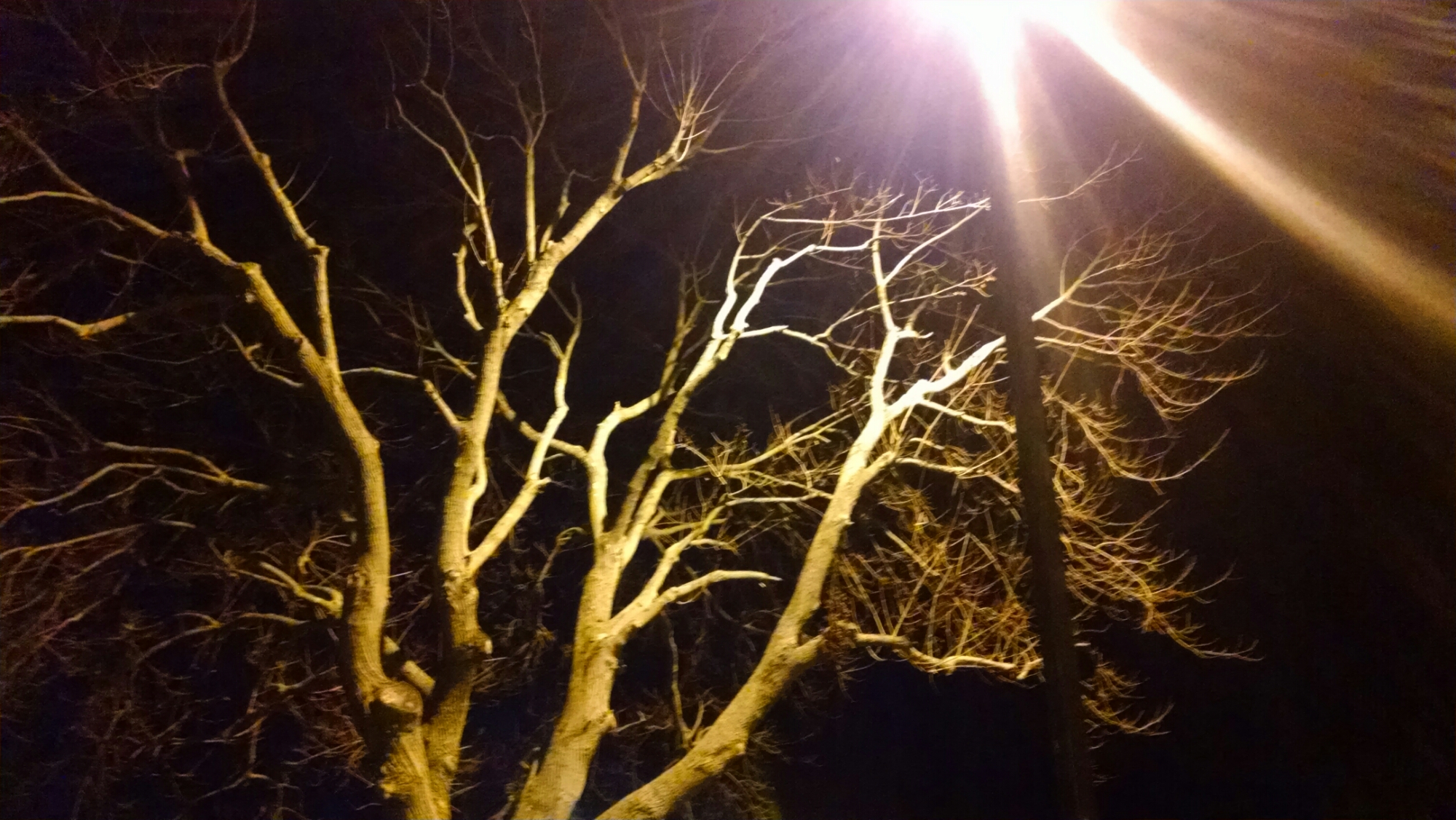
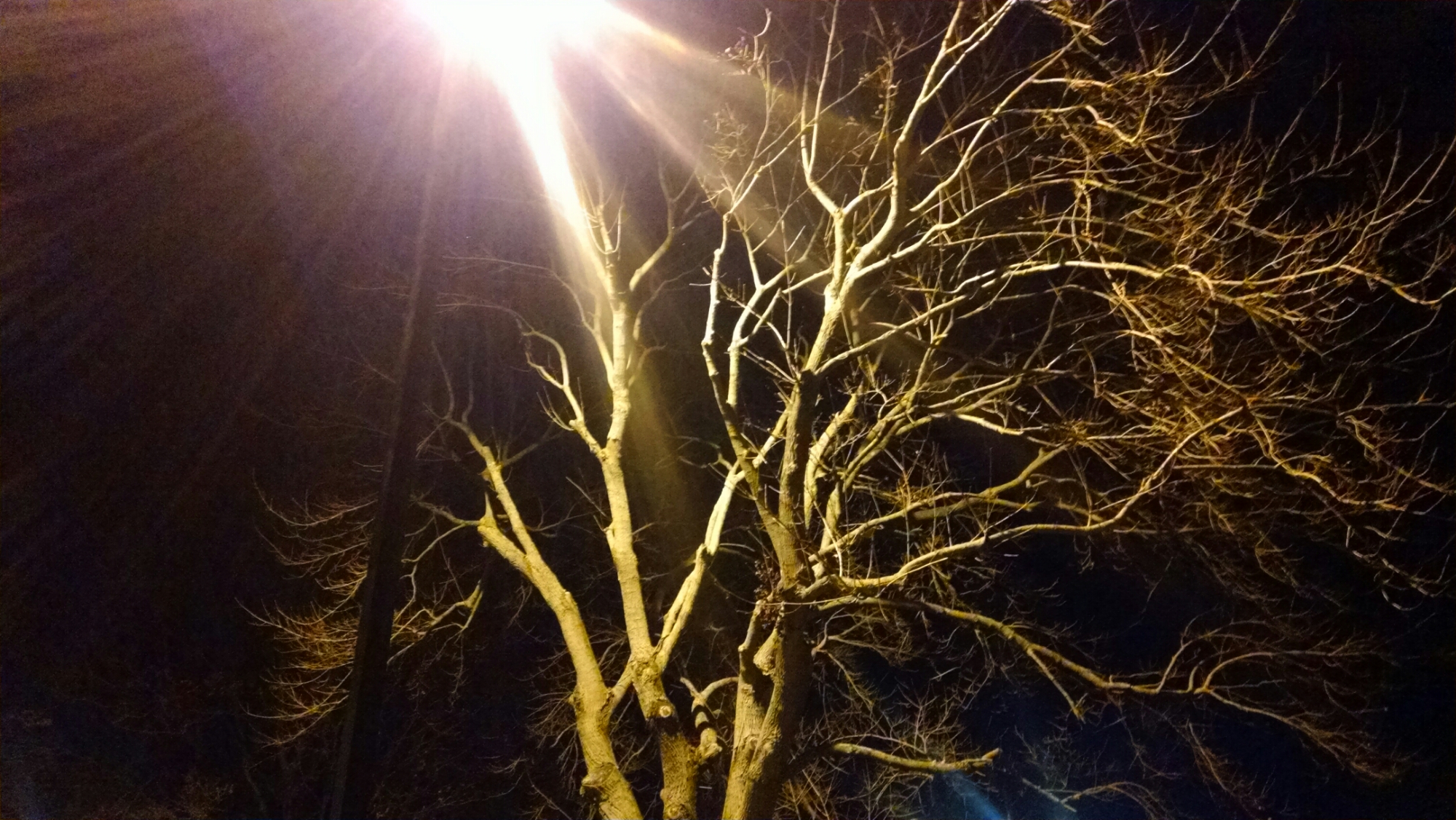
I took several shots and saved the best three. At the time, I thought it best to fit the light source into the frame. Now, I wish I hadn’t. The glare robs the shot of some of its magic.
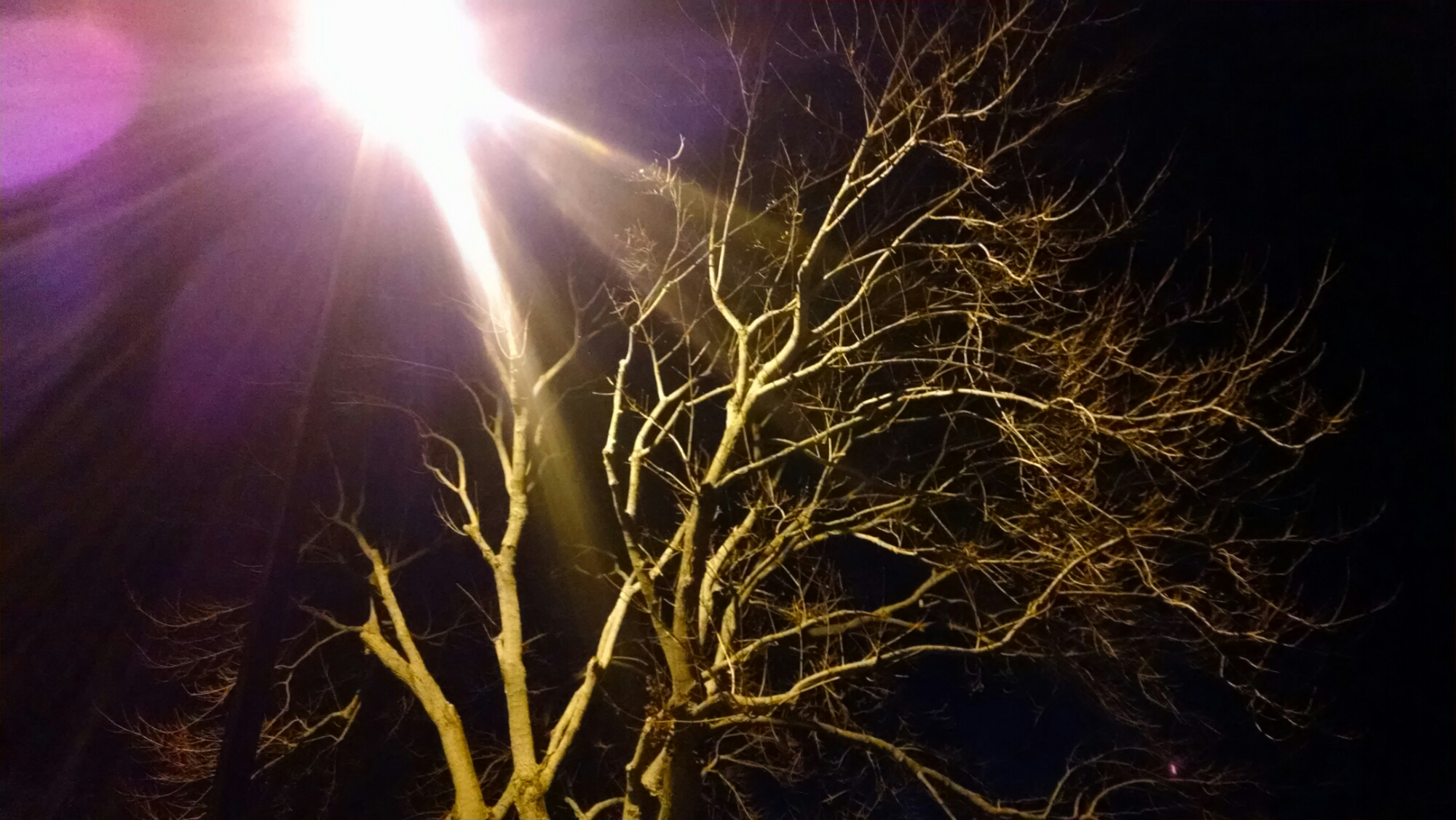
Still, the lines of the branches are interesting in a way; they fade into darkness, and seem almost tangled up in it. In person, the tree seemed as alive as it actually was, seemed almost to thrum with life.
I got into my car, thinking about how I’d gotten to campus only half an hour before I was due to teach and not an hour before like I’d planned. I’d wanted to try capturing the way this little tree-choked ridge nearby created some seriously interesting shadow-play among the trees.
The lot lamps shone like beacons. I turned in their direction, drove a quarter mile and pulled off the road onto the access lane that ran behind the building you see below.

I walked fifty yards out into a lightless lawn to capture the way spotlights capture the high rise of the performing arts center. The grass was wet. The air still. The viewfinder window showed the faintest curl of moonlight. If that faint curl hadn’t been visible I would not have taken this picture. The moonlight gets washed out of the exposure by the force of the spotlight. But I know it’s there. If it hadn’t been, I wouldn’t have this exposure.


 Patrick Faller
Leave a reply to Joseph Kane Cancel reply